

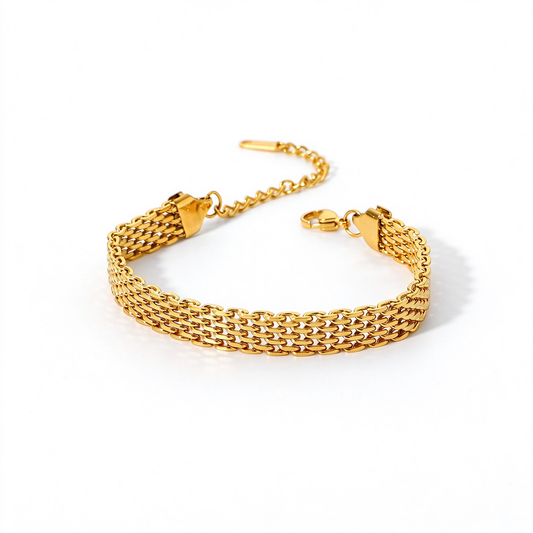

How to Keep Necklaces From Tangling: Simple Tips That Actually Help
If you've ever opened your jewelry box and found two necklaces somehow tied into one impossible knot, you're not alone.
Fine chains seem to have a talent for getting tangled when you're not looking.
It can happen when several necklaces are stored together, when a chain is tossed into a bag, or even when you take off a necklace and leave it on a nightstand.
The good news is that you don't need a complicated jewelry organizer to prevent most tangles.
A few small changes to how you wear and store your necklaces can make a noticeable difference.
Why Do Necklaces Get Tangled So Easily?
Necklaces are particularly easy to tangle because the chains are long, flexible, and often very thin.
A few things make it worse:
- Several necklaces stored together
- Fine chains mixed with thicker chains
- Different necklace lengths overlapping
- Clasps catching onto other chains
- Tossing necklaces into a purse or travel bag
- Leaving chains loose and unfastened
Once one chain loops through another, moving the jewelry around usually makes the knot tighter.
That's why the easiest way to deal with tangled necklaces is actually to prevent the tangling in the first place.

1. Give Each Necklace Its Own Space
This is probably the simplest change you can make.
Instead of throwing all your necklaces into the same compartment, give each one its own place.
You don't necessarily need a large jewelry box. Small individual pouches, compartments, hooks, or even a simple jewelry tray can work.
The important part is that the chains aren't constantly sitting on top of one another.
If you wear a few necklaces regularly, keeping them in separate spots also makes it much easier to find the one you want.
2. Fasten the Clasp Before You Put It Away
Here's a small habit that's easy to overlook.
Close the clasp before storing your necklace.
A loose clasp can catch onto another chain, which is one of the easiest ways for several necklaces to end up tangled together.
Once the necklace is fastened, keep the chain as straight as possible when putting it away.
It takes a few extra seconds, but those seconds are usually much better than spending ten minutes trying to undo a knot later.
3. Don't Store All Your Necklaces in One Pile
A jewelry box can look organized while the chains inside are anything but.
If your necklaces are sitting in one pile, every time you take one out you're likely moving several others with it.
Over time, the chains twist around each other.
If you have multiple necklaces, try separating them by:
- Length
- Style
- How often you wear them
For example, your everyday necklace can have its own easy-to-reach spot, while pieces you only wear occasionally can stay in separate pouches.
Simple is usually enough.
4. Be Careful When Layering Necklaces
Layering several necklaces can look great, but it can also create a new opportunity for tangling.
Different chain lengths usually help because the necklaces don't all sit in exactly the same place.
If you're wearing several necklaces together, try pairing different lengths instead of putting three chains of almost identical length around your neck.
You can also choose chains with slightly different weights or textures.
And if you find that a particular combination always ends up twisted together, there's probably no reason to keep fighting it.
Some combinations simply don't behave well together.
If you're interested in layering, you can also read our guide:
How to Layer Necklaces Without Looking Overdone
5. Take a Little Extra Care When Packing Necklaces for Travel
Travel is when necklace tangles seem to get especially bad.
You put a few pieces into your bag, everything looks fine, and then you open it at the hotel and find a tiny ball of chains.
One simple solution is to keep each necklace separate.
Small jewelry pouches work well, but you can also use other simple methods at home.
For a delicate chain, one useful trick is to thread part of the chain through a drinking straw and close the clasp.
The straw keeps the chain from folding back onto itself.
For longer necklaces, a small individual jewelry pouch or compartment is usually easier.
Whatever method you use, try not to put several loose chains into the same bag.

6. Don't Leave Necklaces Loose on Your Nightstand
It's easy to come home, take off your necklace, and leave it wherever there's an empty spot.
Then the next morning, you move it to make room for something else.
A few days later, there's a small pile of chains sitting together.
That's how tangles start.
If you have a necklace you wear almost every day, give it a regular place.
It doesn't need to be fancy.
A small tray or jewelry dish beside your usual getting-ready area is enough.
7. What If Your Necklace Is Already Tangled?
Don't pull on it.
That's usually the first thing people do, and it's also one of the easiest ways to make the knot tighter or put unnecessary stress on a delicate chain.
Instead:
Lay the necklace flat.
Put it on a clean, flat surface where you can see the knot.
Separate the loose parts.
Use your fingers to gently move the larger loops away from each other.
Loosen the knot slowly.
If the knot is very tight, you can use the tip of a very fine needle or pin to gently work at the center of the knot.
Don't force it.
The goal is to loosen the chain, not pull it apart.
Work a little at a time.
Once one section loosens, the rest of the knot often becomes much easier to undo.
And if the chain is extremely fine or valuable, it may be better to have a jeweler handle it rather than risk breaking it.
8. Which Necklaces Are Most Likely to Tangle?
Not every necklace behaves the same way.
Very fine chains are usually more difficult to manage because they're lightweight and flexible.
Long chains can also be more prone to tangling because there's simply more chain that can loop around itself or another piece.
Multiple delicate chains worn together can create another problem.
That doesn't mean you should avoid fine or layered necklaces.
It just means they may need a little more attention when you're putting them away.
9. A Simple Way to Store Your Everyday Necklaces
If you don't want to reorganize your entire jewelry collection, start with the pieces you wear most.
Try this:
Step 1: Close each clasp.
Step 2: Untangle and straighten the chain.
Step 3: Give each necklace its own space.
Step 4: Keep frequently worn pieces somewhere easy to reach.
Step 5: Store everything somewhere dry and away from unnecessary moisture.
That's it.
You don't need a drawer full of expensive organizers.
A system you'll actually use is much more useful than a complicated one.

What About Necklace Chains That Keep Tangling While You Wear Them?
Sometimes the problem isn't storage.
You may notice a necklace constantly twisting around itself or catching on another necklace while you're wearing it.
If that keeps happening, take a look at:
- The chain thickness
- The necklace length
- The pendant weight
- Whether you're wearing it with another chain
- Whether the two necklaces sit at nearly the same length
Small differences in length can make a big difference when layering.
And if one necklace constantly twists, try wearing it by itself for a day.
You may find that the chain isn't actually the problem — it may simply be getting caught on another piece.
How to Choose the Right Necklace Length for Your Style
The Easiest Rule to Remember
If you only remember one thing from this article, make it this:
Don't store loose necklaces together.
Close the clasps, separate the chains, and give each necklace its own space.
That's enough to prevent a surprising number of tangles.
And when you're traveling, take the extra minute to pack each necklace separately. It's much easier to prevent a knot than to spend your first night away trying to undo one.
Final Thoughts
Necklace tangles are annoying, but they're usually preventable.
You don't need a special system or a huge jewelry organizer. Keeping chains separated, closing the clasps, and taking a little extra care when traveling can go a long way.
And if a necklace does get tangled, resist the urge to pull it apart. Take your time, loosen the knot gradually, and get professional help if the chain is especially delicate.
A little organization now can save you a lot of frustration later.
How to Care for Your Jewelry and Keep It Looking Beautiful
Looking for simple necklaces made for everyday wear? Explore Ever P. Jewelry's collection of everyday jewelry.
Tags:
Previous
Why Is My Jewelry Turning Green? What It Means and What to Do
Next
How to Choose Earrings for Everyday Wear
Related articles

How to Choose Jewelry for a Wedding Guest Outfit
Oct 29 2026


How to Choose Jewelry for Sensitive Skin
Oct 26 2026

How to Choose a Necklace for Your Body Type
Oct 25 2026


