





How to Choose the Right Earring Size for Your Face
Have you ever found a pair of earrings that looked beautiful online, only to wonder whether they'd look the same on you?
Earring size can change the whole feel of a pair. Small studs tend to be subtle and easy to wear, while larger hoops make more of a statement. Drop earrings draw the eye downward and can add movement to an otherwise simple outfit.
There's no single size that works for everyone. Your face shape can be a useful starting point, but your hairstyle, personal taste, and the occasions you dress for matter just as much.
Here's what to consider before choosing your next pair.

Start With the Type of Earring You Want to Wear
Before thinking about face shape, decide what kind of earring you actually enjoy wearing. Studs, hoops, and drop earrings have different proportions, so comparing them by size alone can be misleading.
Stud Earrings
Studs sit close to the earlobe and usually create a more understated look. They're a practical choice for everyday outfits, work, and occasions when you want your jewelry to stay in the background.
Smaller studs work well when you prefer a minimal look. A larger gemstone-style stud or a more noticeable gold design can stand out without hanging below the ear.
If you're buying studs online, check the measurements in millimeters. A difference of just a few millimeters can make a stud look noticeably different, especially when the design has a wide face.
Hoop Earrings
Hoops range from tiny huggies that sit close to the earlobe to larger circles that frame the side of the face.
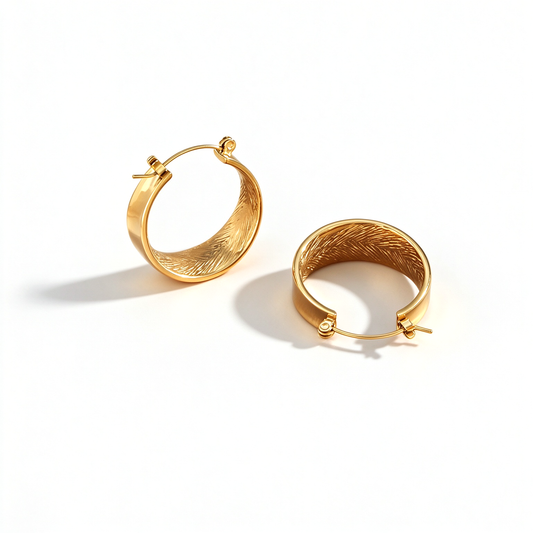
Small hoops are easy to style and tend to feel understated. Medium hoops offer a little more presence without necessarily dominating an outfit. Large hoops create a more noticeable look and can become the main feature of your jewelry.
When comparing hoops, look for the diameter rather than relying on words such as small, medium, or large. These labels aren't standardized, so one brand's medium hoop may be another brand's small.
Also check whether the measurement refers to the hoop's outer or inner diameter. That detail can affect how large the earrings appear when worn.

Drop and Dangle Earrings
Drop earrings hang below the earlobe, while dangle earrings may move more freely as you turn your head.
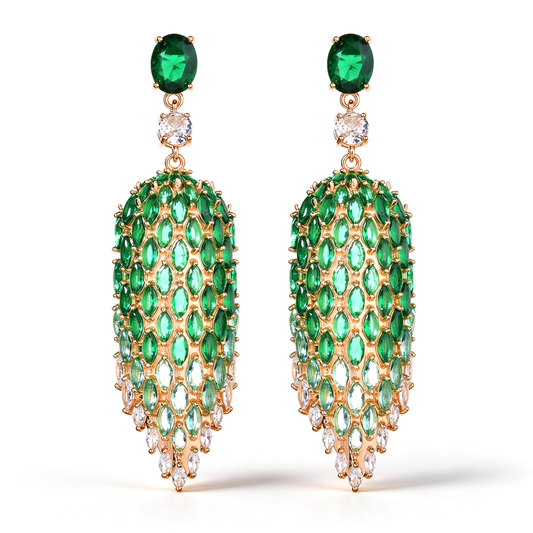
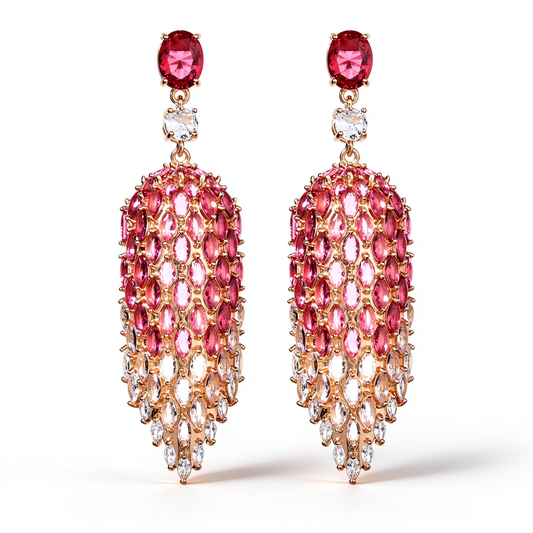
A short drop can add interest without feeling too dressy. Longer designs tend to be more noticeable and can work well with pulled-back hair, open necklines, or outfits that need a finishing touch.
Length isn't the only thing to consider. A slim drop and a wide, decorative drop can have the same measurement but create very different visual effects.
How Face Shape Can Help You Choose Earring Size
Face shape can offer a helpful reference, but it shouldn't dictate what you're allowed to wear. Most people have a mix of features rather than one perfectly defined shape.
Instead of trying to follow strict rules, think about the overall effect you want: something subtle, something that adds width, or something that creates a longer visual line.
If You Have a Round Face
If your face is relatively full around the cheeks, you might enjoy earrings with a longer or more vertical shape, such as slim drops or elongated designs.
These styles can create a different visual line from round studs or large circular hoops. That doesn't mean round earrings are off-limits. Small hoops, huggies, and rounded studs can look just as good if they're closer to your personal style.
If you like larger hoops, try different diameters and see how they look with your usual hairstyle. The goal is to find a proportion you enjoy, not to hide the natural shape of your face.
If You Have an Oval Face
An oval face often works with a wide range of earring shapes, from small studs to medium hoops and longer drops.
If you prefer a simple everyday look, start with a size that feels comfortable and easy to pair with your clothes. If you like statement jewelry, a larger hoop or a more sculptural design can add interest without needing to match a particular face-shape rule.
Consider your hairstyle, too. Earrings that are visible with your hair down may look quite different when your hair is tied back.
If You Have a Square or Angular Face
If your jawline is more defined, you may like rounded hoops, curved designs, or drop earrings with softer edges. These shapes can create a contrast with more angular facial features.
You can also choose geometric earrings if you prefer a sharper, more structured look. Jewelry doesn't need to soften your features to suit you.
Pay attention to the size of the design as well as its shape. A small rounded hoop and an oversized rounded hoop create very different effects.
If You Have a Heart-Shaped Face
If your forehead is wider than your chin, earrings that have a little more visual weight toward the bottom may appeal to you. Some teardrop styles and wider drop designs create that effect.
Slim studs and small hoops are also easy options, especially if you prefer jewelry that doesn't draw too much attention.
Use these suggestions as a starting point rather than a checklist. A pair that makes you feel good is more important than matching a category.

How to Choose Earrings Based on Your Hairstyle
Your hair can change how much of an earring is visible, which is why a pair may look different on you than it does in a product photo.
If you wear your hair down: Small studs and huggies may be partly hidden, while larger hoops or longer drops are easier to see. If you prefer delicate earrings, that's fine too; they can create a quieter look rather than a bold focal point.
If you wear your hair up: More of your earrings will be visible. This is a good opportunity to wear a shape or size that might otherwise disappear behind your hair.
If you have short hair: Earrings may become a more noticeable part of your overall look. Try a few sizes to see whether you prefer a subtle accent or a more prominent design.
If you change your hairstyle often: Choose a versatile pair that works with both loose and tied-back hair. Medium-sized hoops or simple drops can be a useful starting point, depending on your personal style.
How Big Should Everyday Earrings Be?
For everyday wear, the best size is one that fits comfortably into your routine.
If you prefer jewelry that doesn't attract much attention, small studs or huggies may be a natural choice. If you like your jewelry to be visible but still easy to style, try a modest hoop or a simple drop earring.
For larger designs, consider their weight as well as their dimensions. Two earrings can look similar in a photograph but feel very different after several hours of wear.
Check product details for weight when that information is available. If comfort is important to you, start with a lighter design and pay attention to how the earrings feel throughout the day.
You can also think about what you wear most often. If your wardrobe consists mainly of simple tops, everyday dresses, and neutral layers, a versatile pair may get more use than a dramatic style reserved for special occasions.
For more ideas on building a collection around your routine, see our guide to choosing everyday jewelry that matches your personal style].
How to Read Earring Measurements When Shopping Online
Product photos don't always give you an accurate sense of scale. Close-up photography can make a small earring look large, while a model's face and hairstyle may make a larger design appear more subtle.
Before ordering, check these details:
-
Studs: Look for the width or diameter in millimeters.
-
Hoops: Check the stated diameter and whether it refers to the inner or outer measurement.
-
Drop earrings: Check the total length, including any decorative elements if the listing specifies them.
-
Weight: If listed, use it to help judge whether a pair may feel substantial.
-
Closure: Look at how the earring fastens and whether the design suits your usual routine.
If you already own a pair you like, measure it and compare those dimensions with the product listing. This is often more useful than trying to guess the size from a photograph.
When a listing doesn't explain its measurements clearly, ask the seller before buying. It's better to confirm the dimensions than to assume that a product described as small or medium will match your expectations.
Should Your Earrings Match Your Face Shape or Your Personal Style?
Personal style should have the final say.
Face-shape advice can help you explore designs you might not have considered, but it isn't a set of rules. You don't need to avoid hoops because you have a round face or choose long earrings because you have a particular jawline.
Think about what you want your earrings to do. Do you want them to blend into your everyday look? Add a little shine to a simple outfit? Stand out when your hair is pulled back? Once you know the effect you're after, choosing a size becomes much easier.
It can also help to keep a few different styles in your collection. A small pair for everyday errands, a medium hoop for a more polished look, and a longer pair for evenings can cover different situations without requiring a large jewelry wardrobe.
If you're building your collection gradually, our guide to building a simple jewelry collection offers more ideas for choosing pieces you'll reach for regularly.
A Simple Way to Find Your Best Earring Size
If you're still unsure, start with a pair you already enjoy wearing. Notice its size, shape, and weight, then compare those details with the earrings you're considering.
From there, try one small change at a time. If you usually wear tiny studs, a medium hoop may feel like a natural next step. If you already love hoops, experiment with a slightly different diameter or a drop style.
The right pair doesn't have to follow a face-shape rule or match a trend. It should feel comfortable, suit the way you dress, and be something you genuinely want to wear again.
Tag:
Precedente
How Should a Bracelet Fit? A Simple Guide to Bracelet Sizing
Avanti
How to Choose a Necklace for Your Body Type
Articoli correlati

How to Choose Jewelry for a Wedding Guest Outfit
Oct 29 2026


How to Choose Jewelry for Sensitive Skin
Oct 26 2026

How to Choose a Necklace for Your Body Type
Oct 25 2026


