




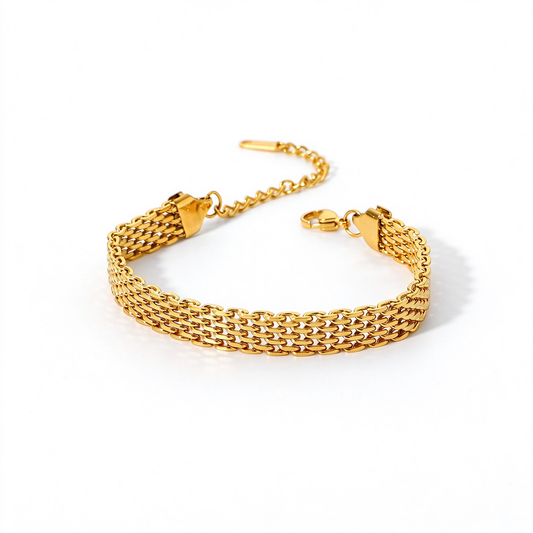

How to Choose Jewelry for Sensitive Skin
Finding jewelry you love is one thing. Finding pieces you can wear comfortably is another.
If you've ever taken off a pair of earrings because your ears felt itchy, or noticed redness beneath a necklace, you may have wondered whether the metal was the problem. Sometimes it is. Nickel allergy is a common cause of allergic contact dermatitis, but irritation can have other causes, too.
The tricky part is that two pieces of jewelry can look almost identical while containing different materials. A gold-colored finish doesn't necessarily mean the piece is made of gold, and a product described as hypoallergenic isn't automatically suitable for everyone.
If you have sensitive skin, knowing what to look for before buying can help you make a more informed choice.

Start by Checking What the Jewelry Is Made Of
The first thing to check is the product's material description. Color and appearance alone won't tell you which metals are underneath the surface.
Look for specific information about the metal used in the main body of the jewelry, the finish, and any components that touch your skin.
For example, an earring may have a decorative gold-colored front but use a different metal for its post. If you're sensitive to certain metals, that small detail may matter more than the appearance of the earring itself.
When shopping online, look for details such as:
-
The base metal used to make the piece.
-
Whether the jewelry has a surface coating or plating.
-
The material used for earring posts, hooks, clasps, and other skin-contact components.
-
Whether the seller provides specific information about nickel content or nickel release.
If the product page simply says "gold," "silver," or "hypoallergenic" without explaining what those terms mean for that particular item, ask for clarification before buying.
A clear material description is more useful than a general promise that a piece is gentle on the skin.
If you've already experienced itching or irritation while wearing jewelry, read our guide to [why jewelry makes your skin itch and what to do about it].
Why Nickel Matters When Choosing Jewelry
Nickel is a metal found in many everyday items, including some jewelry and jewelry components. For people who have a nickel allergy, contact with nickel can trigger allergic contact dermatitis.
Symptoms may include itching, redness, a rash, swelling, or dry, irritated skin where the jewelry touches the body. Reactions don't always appear immediately, and similar symptoms can have other causes.
Earrings are a common source of concern because the posts pass through the earlobes and remain in contact with the surrounding skin. Necklace chains, clasps, bracelet closures, and ring surfaces can also cause problems if they contain a metal you're allergic to.
If you've reacted to jewelry before, pay particular attention to the parts that touch your skin directly.
For earrings, check the posts and backs. For necklaces and bracelets, check the chain and clasp. For rings, check the metal on the inside of the band as well as the outer surface.
Don't assume that a piece is nickel-free just because it looks like gold or silver. Appearance alone cannot confirm its composition.
Is Hypoallergenic Jewelry Always Safe for Sensitive Skin?
Not necessarily.
The word "hypoallergenic" is often used to describe jewelry marketed toward people who are concerned about allergic reactions. However, the term alone doesn't tell you exactly which metals a product contains or guarantee that no one will react to it.
People can have different sensitivities, and irritation can occur for reasons other than a metal allergy.
For example, moisture, friction, soap residue, and pressure can irritate skin around jewelry. A reaction may also be related to a different material or product that comes into contact with the area.
If you know that nickel causes a reaction for you, a general hypoallergenic label isn't as helpful as specific information about the metal components and nickel release.
When possible, choose products with clear material disclosures rather than relying on marketing language alone.
What About Nickel-Free Jewelry?
Nickel-free jewelry may be worth considering if you know or suspect that nickel is a trigger for you. The important question is whether the claim is supported by reliable information about the actual product.
A listing that says "nickel-free" should ideally explain which components the claim covers. The posts, clasps, decorative parts, and underlying metal may not all be made from the same material.
It's also worth understanding the difference between being nickel-free and meeting a particular nickel-release standard. These terms are not interchangeable in every context.
If you have a diagnosed nickel allergy, ask the seller for specific material information rather than assuming that a short label tells the whole story.
If you regularly experience reactions to earrings or other jewelry, a dermatologist can help determine whether a metal allergy is involved. Patch testing may be recommended when allergic contact dermatitis is suspected.
Does Gold-Plated Jewelry Work for Sensitive Skin?
Gold-plated jewelry has a base material covered by a layer of gold. The underlying metal and the thickness and condition of the coating can affect what comes into contact with your skin.
This matters because the gold-colored surface doesn't tell you what the piece is made of underneath.
If the coating becomes worn or damaged, the underlying material may become more exposed. However, the risk of a reaction depends on the actual materials involved and your individual sensitivity.
If you prefer gold-colored jewelry, check whether the product page identifies the base metal and describes the finish. If that information isn't available, ask the seller before ordering.
Gold-filled jewelry and solid gold jewelry are made differently from ordinary gold-plated jewelry, so they shouldn't be treated as identical categories. Their suitability for someone with a metal allergy still depends on the specific composition and any other components in the piece.
For a clearer explanation of these differences, read our guide to the difference between gold-plated, gold-filled, and solid gold jewelry.
Which Jewelry Materials Should You Consider?
There isn't one material that works for every person with sensitive skin. Your known allergies, the construction of the piece, and the quality of the material information all matter.
Here are a few material categories you may come across when shopping.
Solid Gold
Solid gold jewelry is made from a gold alloy throughout rather than having only a thin gold coating over a different base metal.
The karat describes the proportion of gold in the alloy. Other metals may be added to change the color, hardness, or other properties of the piece.
For someone with a metal allergy, the alloy composition still matters. Solid gold does not automatically mean that a piece is free of every metal that could trigger a reaction.
If you are sensitive to a particular metal, look for more detailed information about the alloy rather than relying on the gold karat alone.
Gold-Filled Jewelry
Gold-filled jewelry has a layer of gold mechanically bonded to a base metal. It is different from ordinary gold plating, but the underlying material remains relevant when assessing possible metal sensitivities.
Check the product's material description and ask about the base metal if you have a known allergy.
Gold-Plated Jewelry
Gold-plated jewelry has a gold layer applied to another material. The base metal can vary between products, so the phrase "gold-plated" doesn't identify the entire composition.
If you're considering a plated piece, look for details about the base metal and the components that contact your skin.
Sterling Silver
Sterling silver is an alloy that typically contains 92.5% silver, with other metals making up the remainder.
The additional metal is often copper, but compositions and other components can vary. A sterling silver label alone therefore doesn't establish that every part of a piece is free of metals that may concern you.
If you've had reactions to silver-colored jewelry, check the specific material details rather than assuming that all silver-colored pieces are the same.
Stainless Steel
Stainless steel is used in some jewelry, but its composition varies by grade. Some stainless steel alloys contain nickel.
People with nickel sensitivity should not assume that all stainless steel jewelry is nickel-free or suitable for them. Ask for information about the specific grade and, where relevant, nickel release.
The most useful choice is the one that matches your individual sensitivities and comes with reliable material information.
How to Choose Earrings if Your Ears Are Sensitive
Earrings deserve extra attention because their posts or hooks can remain in close contact with the skin for hours.
Before buying a pair, check the material of the post, hook, and backing, not just the decorative front. If the listing doesn't identify those components, ask the seller.
You may also want to consider the earring's weight. Heavy earrings can pull on the earlobe and cause discomfort even when the material itself isn't triggering an allergic reaction.
Keep an eye on how your ears respond to new jewelry. If an earring causes itching, redness, swelling, or a rash, remove it rather than continuing to wear it in the hope that your skin will adjust.
For more help understanding possible causes of ear discomfort, see our article why earrings hurt and what you can try.

Simple Habits That May Help Reduce Irritation
Choosing suitable materials is important, but how you wear and care for jewelry can also affect your skin.
A few practical habits may help:
-
Keep jewelry clean. Residue from skincare products, soap, sweat, and everyday dirt can collect on jewelry and irritate the surrounding skin.
-
Dry the area after washing. Moisture trapped beneath a necklace, ring, or bracelet may contribute to irritation.
-
Avoid wearing jewelry on already irritated skin. Give the area a chance to recover instead of repeatedly exposing it to the same possible trigger.
-
Check pieces regularly. Look for worn plating, damaged surfaces, or loose components that may rub against the skin.
-
Pay attention to patterns. Notice whether symptoms occur with a particular item, metal, or area of contact.
These habits can help reduce some common sources of irritation, but they cannot prevent every allergic reaction.
If symptoms persist, keep returning, or become severe, seek medical advice rather than trying to solve the problem by changing jewelry alone.
What to Look for When Shopping Online
When you're buying jewelry online, you can't inspect the metal in person. That makes the product description especially important.
Before placing an order, check the following:
-
Material details: Does the listing identify the base metal and finish?
-
Skin-contact components: Are the earring posts, hooks, clasps, and other relevant parts described?
-
Specific claims: If the seller says nickel-free or hypoallergenic, is there supporting information?
-
Product measurements: Do the dimensions and weight suit the way you plan to wear the piece?
-
Customer support: Can the seller answer questions about the materials used?
Be cautious if the listing relies on broad claims but provides little information about the actual construction.
A seller who can explain the materials clearly gives you more useful information for making a decision.
When to Stop Wearing Jewelry and Seek Advice
If you notice itching, redness, swelling, blistering, or a rash where jewelry touches your skin, remove the piece and avoid wearing it again until the cause is clearer.
Don't assume that every reaction is a nickel allergy. Irritation, friction, trapped moisture, and other skin conditions can produce similar symptoms.
If the problem keeps returning, a healthcare professional or dermatologist can help identify the cause. Patch testing may help diagnose allergic contact dermatitis when appropriate.
Seek prompt medical care if you develop significant swelling, spreading redness, severe pain, discharge, or signs of infection. Trouble breathing or swelling of the tongue or throat requires emergency medical attention.
Choose Jewelry With Information You Can Trust
Having sensitive skin doesn't mean you have to give up wearing jewelry. It does mean that material details deserve more attention before you buy.
Look beyond the color and overall appearance. Check the base metal, the finish, and the components that touch your skin. If you know you react to a particular metal, use that information to guide your choices and ask questions when a product description is unclear.
Most importantly, don't rely on a label alone to guarantee that a piece will suit you. Clear material information, attention to your own skin, and appropriate medical advice when needed can help you make more informed decisions about the jewelry you wear.
Schlagwörter:
Zurück
How to Choose a Necklace for Your Body Type
Weiter
How to Store Jewelry Without Tangling or Damaging It
Ähnliche Artikel

How to Choose Jewelry for a Wedding Guest Outfit
Oct 29 2026


How to Choose a Necklace for Your Body Type
Oct 25 2026


