

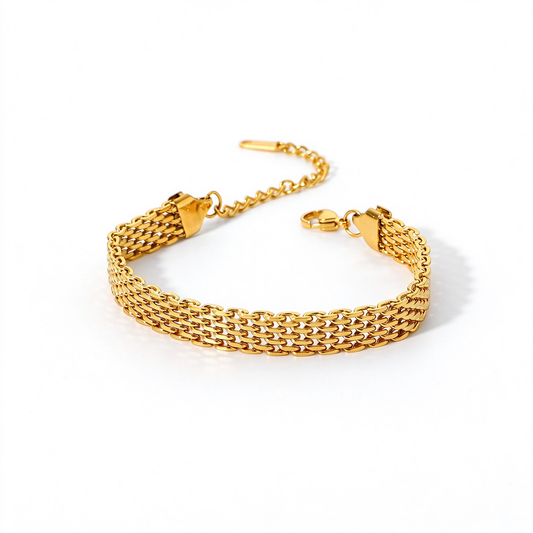

Gold-Plated vs. Gold-Filled vs. Solid Gold: What's the Difference?
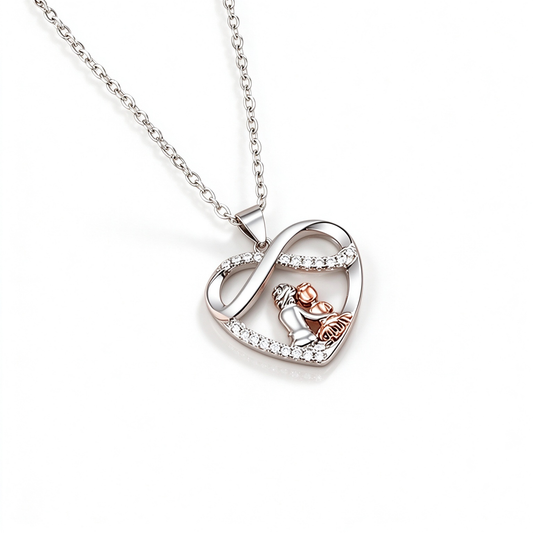
Two gold necklaces can look almost identical in a product photo and still be made very differently. One may have a thin gold coating, another may have a thicker layer of gold bonded to a base metal, and the third may be made from a gold alloy throughout.
That difference affects more than the price tag. It can influence how the jewelry wears over time, what kind of care it needs, and whether it makes sense for the way you plan to wear it.
If you've ever wondered why one gold-colored necklace costs $30 and another costs several hundred dollars, the material is a good place to start.
Here's what gold-plated, gold-filled, and solid gold actually mean—and how to decide which one is right for you.

What Is Gold-Plated Jewelry?
Gold-plated jewelry has a layer of gold applied to a different metal underneath. The base metal can vary by product, so it's worth checking the material description rather than assuming every gold-plated piece is made the same way.
The gold layer gives the jewelry its gold appearance without requiring the entire piece to be made from a gold alloy. That's one reason gold-plated pieces are often more affordable than gold-filled or solid gold alternatives.
The trade-off is the surface finish. Because the gold is only a coating, it can gradually wear away with friction, frequent handling, moisture, and contact with personal care products. How quickly that happens depends on factors such as the plating process, coating thickness, base material, and how the piece is worn.
A necklace that is worn occasionally may experience less friction than a ring or bracelet that is handled throughout the day.
Gold-plated jewelry may be a good fit if:
-
You want the look of gold without a fine-jewelry price tag.
-
You enjoy changing your accessories to match different outfits.
-
You're comfortable following care instructions to help preserve the finish.
-
You want to try a particular style before spending more on a similar piece.
Gold-plated jewelry isn't automatically poor quality. The important thing is to understand what you're buying and have realistic expectations about the finish.
What Is Gold-Filled Jewelry?
Gold-filled jewelry also has a base metal underneath, but the gold layer is made differently from ordinary plating.
In the US, the term “gold-filled” has a specific meaning under the Federal Trade Commission's jewelry guidance. Qualifying gold-filled material uses a mechanically bonded gold-alloy layer, and the gold layer generally must account for at least one-twentieth of the item's metal weight when described under the standard 1/20 gold-filled designation. <Cite refs={["turn311574search24","turn311574search26"]}/>
That thicker bonded layer is one of the main differences between gold-filled and typical gold-plated jewelry.
Gold-filled jewelry is often chosen by people who want a gold surface that can better withstand regular wear than ordinary thin plating, without paying the price of solid gold.
However, gold-filled doesn't mean the entire piece is gold. It also doesn't mean the jewelry can never show wear. Its performance still depends on construction, use, and care.
Gold-filled jewelry may be worth considering if:
-
You wear certain pieces regularly and want a more substantial gold layer.
-
You prefer the appearance of gold but don't want to pay for solid gold.
-
You understand that the piece still contains a base metal.
-
You're willing to check the seller's material descriptions and product markings.
When shopping, look for clear labeling rather than relying on phrases such as “gold finish” or “gold color.” Those descriptions alone don't establish that a product is gold-filled.

What Is Solid Gold Jewelry?
Solid gold jewelry is made from a gold alloy throughout the metal portion of the piece, rather than relying on a separate gold surface layer over a different metal.
The word “solid” does not mean the item is pure gold. Most gold jewelry is alloyed with other metals to give it the desired color, strength, and working properties.
You'll often see gold described by karat:
-
10K gold: 41.7% gold.
-
14K gold: 58.3% gold.
-
18K gold: 75% gold.
-
24K gold: Nearly pure gold.
Higher karat means a greater proportion of gold, but it doesn't automatically mean a piece is better for every purpose. The other metals in the alloy, the design, and the way the jewelry is made also matter.
Solid gold doesn't have a separate gold coating that can wear through to reveal a base metal. It can still scratch, bend, or become damaged, and some alloys may change appearance over time.
It's also worth checking whether a piece is hollow or solid in construction. “Solid gold” refers to the material, while “hollow” describes how the piece is built. A hollow gold-alloy necklace can still be solid gold in material composition, even though it isn't made from a solid mass of metal.
Solid gold may be a good choice if:
-
You want jewelry for frequent, long-term wear.
-
You prefer a material without a separate gold-plated surface.
-
You have the budget for a higher upfront cost.
-
You want a piece that may be kept, repaired, or passed down over time.
Solid gold generally costs more because the piece contains a much greater amount of gold than plated or gold-filled alternatives.
Gold-Plated vs. Gold-Filled vs. Solid Gold: A Quick Comparison
| Feature | Gold-plated | Gold-filled | Solid gold |
|---|---|---|---|
| Construction | Gold coating over another metal | Mechanically bonded gold-alloy layer over a base metal | Gold alloy throughout the metal |
| Gold content | Primarily a surface layer | Thicker gold layer; qualifying 1/20 gold-filled material has a defined weight ratio | Depends on karat |
| Typical price | Lower | Middle | Higher |
| Surface wear | Coating can wear through | Generally more substantial surface layer than ordinary plating | No separate gold layer to wear through |
| Care | Follow finish-specific instructions | Follow product-specific instructions | Still needs care to prevent scratches and damage |
| Best suited to | Affordable style options | A middle ground between cost and a thicker gold layer | Long-term ownership and fine jewelry |
These are general comparisons, not guarantees about every product. Construction, workmanship, finish, and the seller's actual material specifications all matter.
Which Type of Gold Jewelry Lasts the Longest?
There isn't a single answer for every piece, but the construction gives you a useful starting point.
Solid gold doesn't lose its gold color through the wearing away of a separate surface layer. That makes it appealing for jewelry intended to be worn and kept for many years.
Gold-filled jewelry has a thicker bonded gold layer than ordinary gold plating, so it can be a practical middle ground for people who want regular wear without the cost of solid gold.
Gold-plated jewelry has a surface coating that can gradually wear away. The rate depends on the quality and thickness of the coating, the base material, the design, and how often the piece comes into contact with skin, clothing, moisture, and personal care products.
It's better to look at the actual construction than trust a promise that a piece will last a specific number of years. Without detailed product specifications and real-world wear testing, a precise lifespan is difficult to guarantee.

Does More Expensive Jewelry Always Mean Better Quality?
Not necessarily.
Price is influenced by the amount of gold in a piece, its construction, the complexity of the design, workmanship, brand positioning, and other factors.
A solid gold necklace will usually cost more than a similar gold-plated necklace because it contains substantially more gold. But price alone doesn't tell you whether the clasp is well made, whether the chain suits your needs, or whether the design is comfortable to wear.
The same applies to plated jewelry. Two pieces at similar prices may use different base metals, coating methods, and levels of workmanship.
Before buying, look beyond the product photo. Check the stated materials, the type of gold finish, dimensions, care instructions, and return policy.
A well-described piece that suits your needs is a better choice than a more expensive item whose materials you don't understand.
Which Type Is Best for Everyday Wear?
That depends on your budget, how often you wear jewelry, and what you expect from it.
If You Like Changing Your Look
Gold-plated jewelry can make sense when you enjoy trying different designs, following trends, or matching accessories to specific outfits.
You can build variety into your collection without spending as much on every piece. Just remember that the finish may need more careful handling than solid gold.
If You Want a Middle Ground
Gold-filled jewelry may appeal to you if you want a more substantial gold layer than ordinary plating but aren't ready to spend on solid gold.
Check the exact gold-filled designation and the rest of the material description. Don't assume that every product advertised as “gold layered” or “gold tone” qualifies as gold-filled.
If You Want a Long-Term Favorite
Solid gold is worth considering for a piece you expect to wear frequently or keep for many years.
It has a higher initial cost, so think about whether the design, fit, and style are something you'll genuinely enjoy wearing over time. A simple necklace you reach for constantly may be a more useful purchase than an elaborate piece that rarely leaves your jewelry box.
What About Sensitive Skin?
If you have sensitive skin or a known metal allergy, the material underneath the gold finish deserves attention.
Gold-plated and gold-filled pieces both contain a base metal, and the composition can vary. Solid gold also comes in different karats and alloys, so the karat alone doesn't tell you everything about the other metals in the piece.
Neither a gold-colored surface nor a higher price guarantees that a piece will be suitable for every person with sensitive skin.
Look for specific material information, including the base metal where relevant. If you have a confirmed allergy, ask the seller about the composition and consult a dermatologist if you need help identifying materials that are suitable for you.
How to Care for Each Type
Different constructions call for slightly different expectations, but a few habits help with most jewelry.
For gold-plated jewelry: Avoid unnecessary friction and follow the manufacturer's cleaning instructions. Remove pieces before showering, swimming, or exercising when practical, and keep them away from harsh cleaners.
For gold-filled jewelry: Clean gently and avoid abrasive products. Although its gold layer is more substantial than ordinary plating, it still benefits from sensible care.
For solid gold jewelry: Use a cleaning method appropriate for the alloy and any gemstones or decorative elements. Store pieces separately to reduce scratches and tangling, and have delicate settings checked when necessary.
For all three, perfume, lotion, sunscreen, and other personal care products are best applied before putting on jewelry. Let the products dry first, and remove your pieces before storing them.
For more specific advice, see our guide to [How to Clean Gold-Plated Jewelry Without Damaging It] and our tips on [How to Keep Jewelry From Tarnishing].
How to Tell What You're Buying Online
When you shop online, you usually can't inspect the jewelry in person. That makes the product description especially important.
Before placing an order, check these details:
-
The exact material: Is the item gold-plated, gold-filled, or a specified karat of solid gold?
-
The base metal: If the piece has a gold coating, what metal is underneath?
-
The finish or coating details: Does the seller provide meaningful information about the process or specification?
-
The karat description: If a gold layer or gold alloy is specified, what karat is stated, and what does that description apply to?
-
The care instructions: Are there clear instructions for keeping the finish in good condition?
-
The seller's return policy: Can you return the piece if it isn't what you expected?
Be cautious when a listing uses several gold-related terms interchangeably without explaining the construction. “Gold tone,” “gold color,” and “gold plated” are not interchangeable descriptions of material composition.
If something is unclear, ask before buying. A trustworthy product description should help you understand what you're paying for.
So, Which One Should You Choose?
Gold-plated, gold-filled, and solid gold each have a place in a jewelry collection. They aren't simply three grades of the same material; they are different constructions with different costs and care considerations.
Gold-plated jewelry can be a practical way to enjoy more styles for less money. Gold-filled offers a thicker bonded gold layer over a base metal. Solid gold costs more upfront but doesn't depend on a separate gold coating for its color.
Think about how often you'll wear the piece, how much you want to spend, and whether you prefer variety or a long-term favorite.
Once you understand what's behind the gold color, choosing jewelry becomes a lot less confusing—and you're better equipped to find a piece that fits your style, budget, and expectations.
How to Choose Everyday Jewelry That Matches Your Personal Style
Tags:
Previous
Why Does Jewelry Make My Skin Itch? Common Causes and What to Do
Next
How Should a Bracelet Fit? A Simple Guide to Bracelet Sizing
Related articles

How to Choose Jewelry for a Wedding Guest Outfit
Oct 29 2026


How to Choose Jewelry for Sensitive Skin
Oct 26 2026

How to Choose a Necklace for Your Body Type
Oct 25 2026


